Monday, 30 June 2008

What is Bikejoring?

One or more dogs in harnesses pulling a cyclist. A dryland mushing recreation or sport.

Origins

It sometimes occurs to me that some people might drift to this blog, who don't have a clue what bikejoring is! I mean, its not exactly an Olympic sport is it? So time to post my definitive guide to bikejoring....

For many centuries - maybe for millennia ... the tribal people of the Far North used dogs as beasts of burden. Dogs would be used to carry loads, and to pull loads - including sleds over snow and ice. This practice extended from Siberia, throughout Alaska and Canada, through to Greenland.

During the late 19th century, Westerners seeking their fortunes, flocked to Alaska during the Gold Rush. There they encountered indigenous sled-dogs, and began to utilise them for their own purposes. Not only did they utilise and work the dogs, but the bored prospectors also organised the first sled-dog races. The races quickly became so competitive that looking for a winning edge, mushers (as the racers were now calling themselves) began to import sled-dogs from North-East Siberia, or even create their own new breeds.

Prospectors were attracted to Alaska from all over the Western World, including from Scandinavia. According to modern folklore, some of the Scandinavian prospectors returned home, bringing their mushing skills and experience with them. Some of these Gold Rush veterans may have then combined their mushing skills with their Scandinavian love of skiing. Wearing skis, someone attached one or two dogs to themselves (via a special belt). They had invented the new mushing sport of skijoring! Instead of pulling a sled - dogs pulled a skier!


Skijoring is now a well established sport. However skijorers don't have snow 12 months of the year. Some skijorers started to look for ways to exercise their dogs out of season. Bikejoring was born. No snow? attach your dog or dogs to a bike, and all hell breaks loose. That is the line of bikejoring heritage - working dogs of Far Northern peoples - racing sleddogs - skijoring - and now bikejoring.

So exactly what does bikejoring involve?

One strong bicycle with good brakes. At least one dog (maybe two, three - more would be insane) that are trained to pull, run, and to lead. The dog/s should be fitted with pulling harnesses such as x-back harnesses. A towline - preferably with a bungee shock absorber fitted. If more than one dog - a gangline (splitter lines) and maybe necklines between the dogs. A good safety helmet.


Is bikejoring safe? No, it is dangerous. Should you try it - it is your own responsibility. When dogs run, things move fast - and they are never under perfect control. If they see something to chase then they may well do so - through gorse bushes, between trees, over curbs, across roads. Have you ever tried to dismount a bicycle in a hurry that is being pulled at 20 mph?

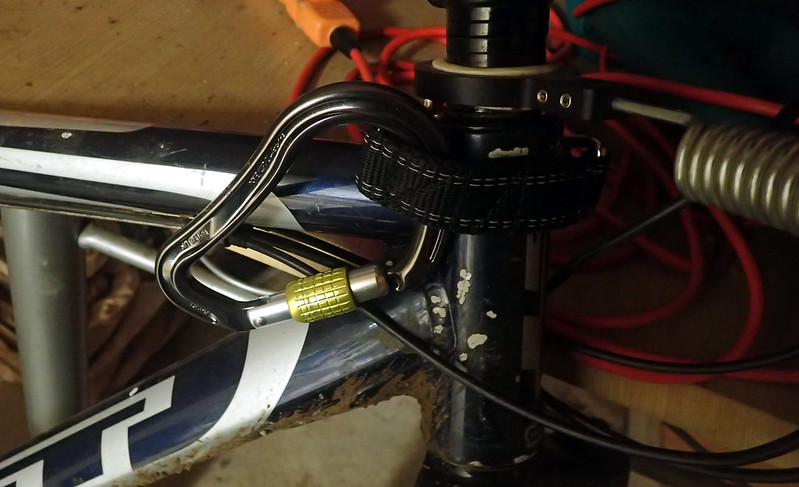
Other fittings? There is a problem with the line dropping suddenly and trapping either around the front wheel, or in the bike forks. I have discussed this in a previous post - but there are manufactured solutions. There are also attachments (e.g. the Springer and Walky Dog) that allow you to walk or run one or two dogs to the side of a bicycle in a more controlled manner - that is not bikejoring.

Recreation or sport? Both. Although it primarily exists as a recreation or training activity - it is increasingly being featured as a competitive sport both in North America and across Continental Europe.

So what is Dog-scootering? Exactly the same except that a bicycle is replaced by a grown up cross country kick scooter. A disadvantage of scooters is that you cannot pedal to help the dog/s and kicking is less smooth than pedaling, but an advantage is that it is easier to dismount a scooter. Scooters are very popular at dryland races in the UK husky racing scene. Some scooters are now being produced specifically for cross country dog-scootering.

How do you train a dog to lead/pull? Think about it. A puppy - tight leash. What does it naturally do? Pulling is more natural to a dog than walking to heel. Mushers embrace this natural urge. However,a dog that leads ahead needs to learn commands to turn left, right, slowdown, stop, ignore game, run past people/dogs etc. Personally I would recommend that you train a lead dog by allowing a pup to lead ahead - always saying the commands when turning etc. Running canicross style is especially good - running behind your young dog harnessed to you, shouting out the commands that your pup is by now use to. Moving to a bicycle is then an easy progression.

What breed of dogs? Sled-dog breeds such as Siberian Huskies and Samoyeds are popular but there is no reason that other breeds (or crosses) cannot bikejor. Pointer and pointer crosses often excel. I'm trying to train a dalmatian. I would suggest that any medium to large breed/cross dog with a working or utility heritage would be suitable. Even border collies have been successfully trained to bikejor. Most dogs love to run and to work. There is no reason that a small dog couldn't bikejor - just try and to help it by pedaling ;-)

Have fun and be safe.

Sunday, 29 June 2008

Two Dog Bikejor Training

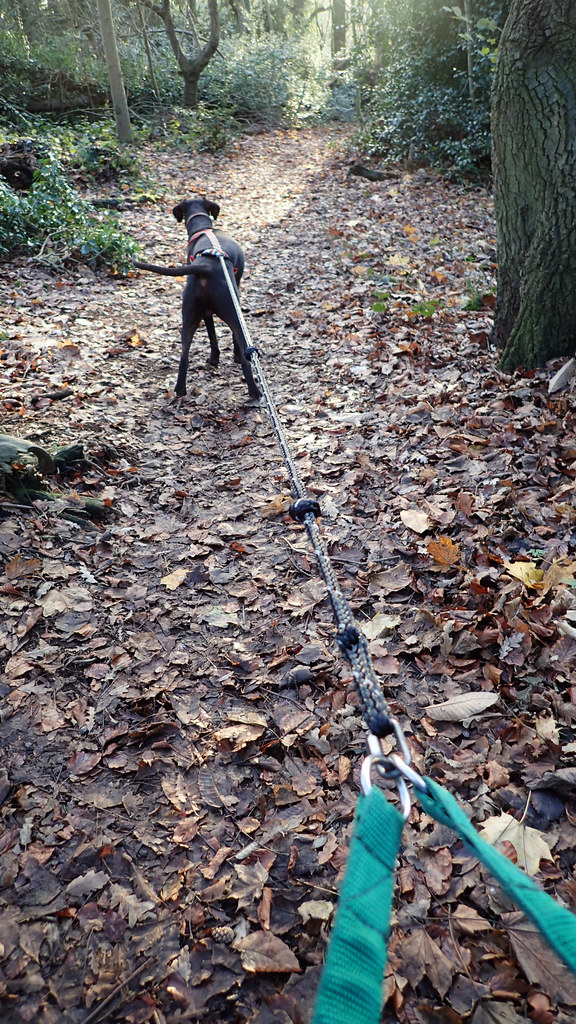
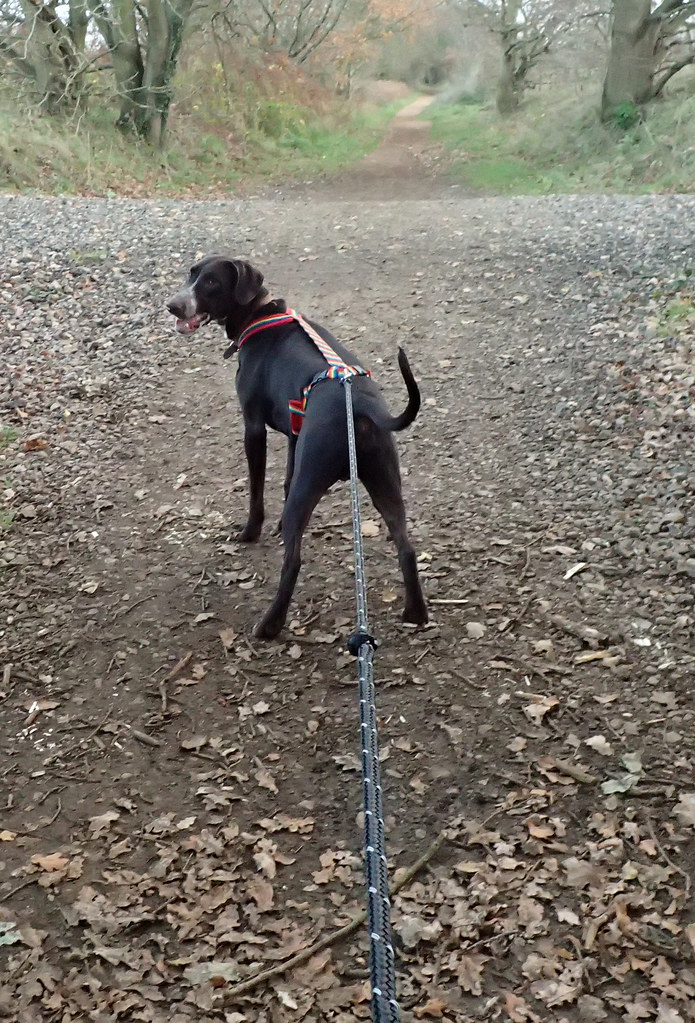
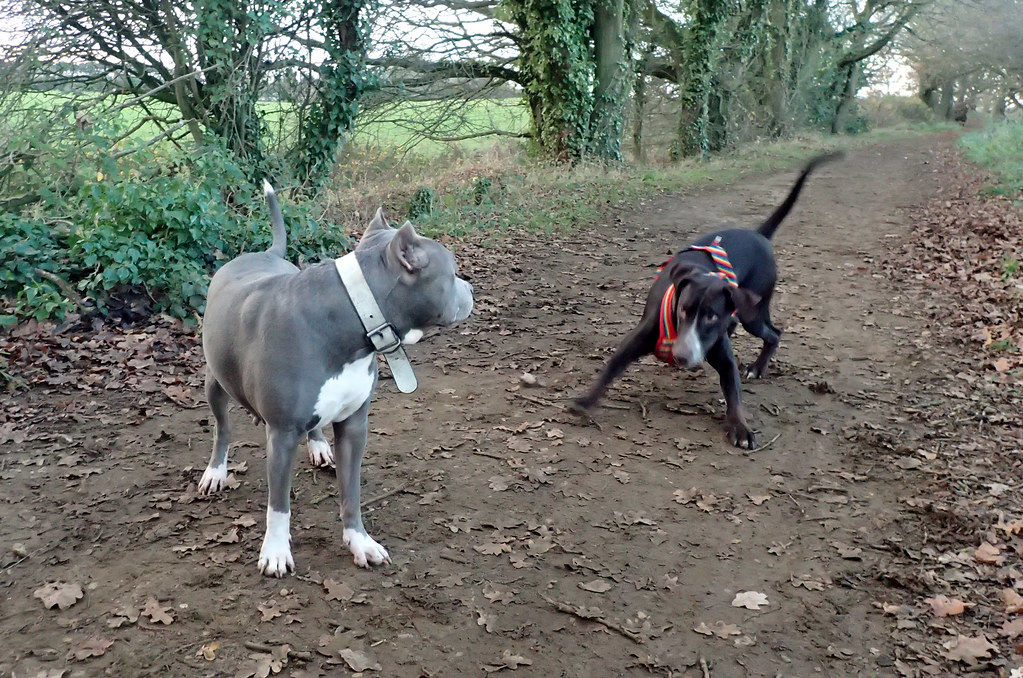
Well, I'm still waiting for those Walky Dogs to arrive! In the meanwhile - I just can't resist it, I have to exercise the dogs, I have to bikejor. I usually wait until its cool late evening - then off we go - the two dogs in x-back harnesses on the double gangline. I'm finding it far more difficult with two dogs. Belle is still so young, and very playful. For example, I took them out this evening .... here is a list of the problems that we encountered:

  • Line tangles.
  • Belle trying to grab the gangline.
  • Belle dragging.
  • Belle escaped and went off chasing rabbits.
  • Wolfy managed to grab and eat a road kill rabbit whilst crossing a road.
  • The dogs killed a wood pigeon that failed to evacuate their path.
  • Wolfy dragging on the way back!
  • They tried pulling me on the bike through a pub doorway!

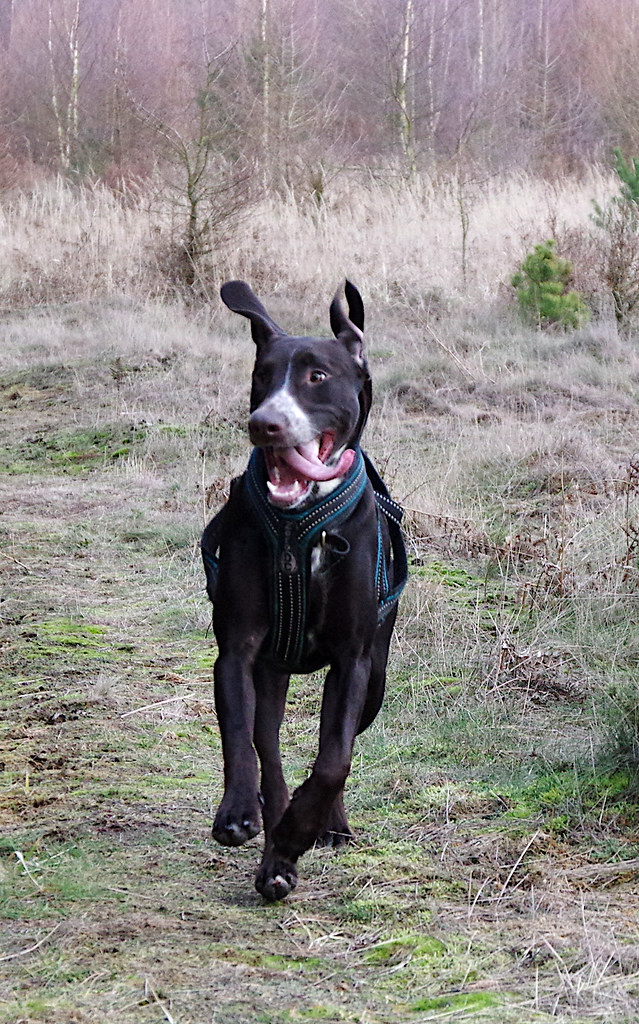
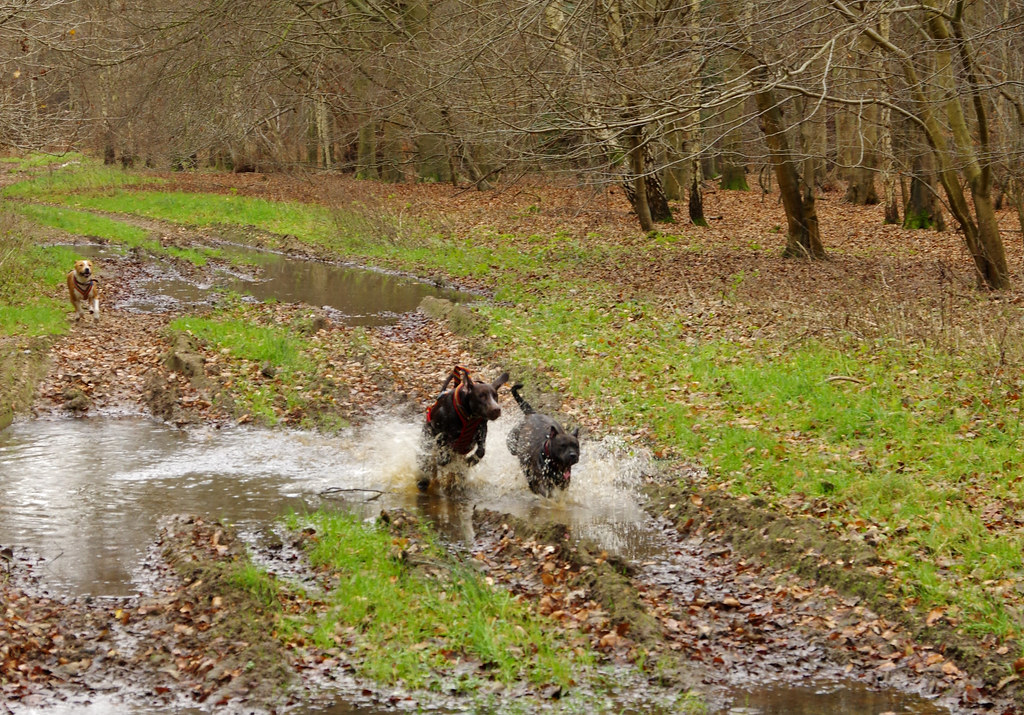
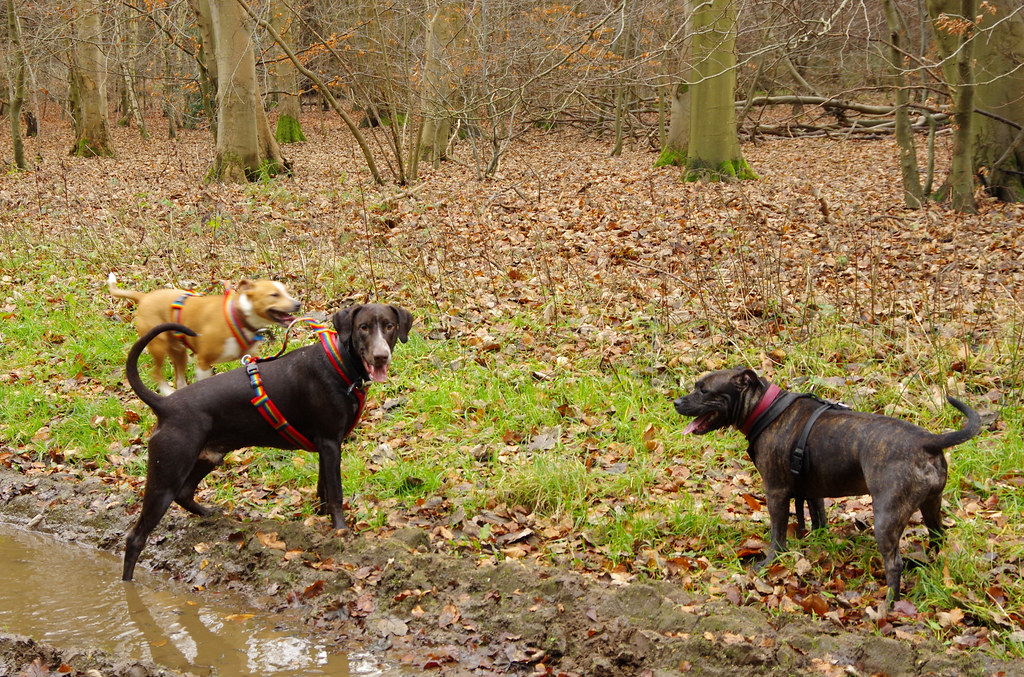
However, when it works, it works well as these photos show. Top speed so far is 17 miles per hour - but that's mainly Wolfy - Belle is still so young that I have to hit the brakes for her. The three of us are certainly on a learning curve.

I'm confident that patience, fun, and practice will iron out some of the problems before the next winter season. And if not? I'm sure that Belle will make a fine carriage dog!

Other news: Belle had her first season (hopefully her last, as I plan on having her neutered), and I was given a pair of x-back harnesses suitable for Belle by an online friend :-) Still waiting for the Walky Dogs - and that Bike Antenna.

Saturday, 28 June 2008


Why did the bikejorer cross the road?

Why, to get to the other side of course!

Thursday, 19 June 2008

Training Belle

I've recently started to train my young dalmatian Belle, to run in harness with Wolfy. We have been going out during the cool of the late evenings this week, either canicross running, or bikejoring short distances.

When it works well, it works well. But when they become tired or distracted, it can be hell to keep them focused and untangled! I'm new to all of this, and I have a lot to learn. I'm using a two dog gangline from SnowPaws - either on the end of my canicross ladder leash, or attached to the bikejor towline (which includes a shock absorber).

Belle is still very young (nine months) so I don't try to take them far or fast. I have another mountain bike for bikejoring - our third joring bike! We keep buying cheap dirt bikes, and basically wear them out pretty quick! This one cost me £31 on Ebay. I've cleaned it all up, removed the rust, lubricated it, put new brake shoes (yes, it has V brakes again) on it, and I already like this one. Its an Apollo X-Rated dirt bike with 26" wheels and a 14" frame. They were cheap bikes retailed from Halfords a few years ago. Ok, its not what I really wanted. But I can't afford that new Giant mountain bike yet!

I've ordered a new pair of Walky Dog attachments (that allow dogs to be attached next to a bicycle) to fit to it, to replace the heavy and cumbersome Springers. The supplier has emailed me to inform me that delivery is going to be delayed for a few weeks, but check this Blog at a later date for reviews and comparisons with the Springers. I haven't seen anywhere else on the Net that compares and reviews both the Springer and Walky Dog attachments - especially twin sets for running two dogs from one bike.

I'm also looking forward to receiving and trying out the bike antenna (an attachment for suspending a towline over the front wheel of the bike when bikejoring with a dog or dogs pulling from in front of a bicycle). I've become pretty omfortable with simply suspending a plastic tube over the shock absorger to stop it trapping between the forks and front wheel - so I'll be reviewing the antenna to see if that is also good value or not.

More posts soon. Tight towlines!

Saturday, 14 June 2008

Feeling the Heat

A subject that has cropped up on the SibeSpace Forum lately has been Walking dogs in hot weather. Now this is something that I'm often guilty of - is it really fair to take dogs out for walks in the full summer sun? Certainly it often seems to turn sunny during our summer hikes. I have to take great care to keep stopping and offering Wolfy water in the shade. I also like to take my dogs out with us on weekend family trips. I hate the idea of leaving the dogs at home caged without us. Instead, I often walk around the City with both dogs on leashes - unable to join the rest of the family inside the shopping malls - I've become accustomed to waiting outside of the shops with my dogs.

I remember a shooting friend losing a dog when he worked it in warm weather. However, his dog wasn't fit - he gave it little exercise outside of the shooting season.

Wolfy especially feels the heat.

Subsequently I'm not running the dogs very much at the moment. I usually walk them very late into the day when it is cooler. If the weather turns particularly cool, then yes, a short run on canicross leash or even better, a run on the bike and springers - with a cool down in the river halfway. But leaving them at home during the day while I go out to enjoy the Sun? Maybe sometimes.

By the way, I'll post more on the subject later - but I've just bought another used bike (I wish that I could afford that new bike!). I've also ordered two Walky Dog bicycle attachments to replace my worn and bent old springers. More on that in the next post maybe?

Oh - I just had to post this new YouTube bikejoring video. Its by niezbytogarniety and features some brilliant joring with HOT hounds. How about that for walking dogs in hot weather?). enjoy!

Monday, 9 June 2008

The 62 Mile Dog Walk - Day 3

Day 3 - the last 16 miles. We stayed the previous night at the Gin Trap Inn in Ringstead. Following a full English breakfast, we made our way through the village. It looked as though it was going to be another sunny day! We turned towards Holme Beach just past Ringstead Mill, and passed the last Peddars Way Sculpture. We reached the beach at Holme-Next-To-Sea, topped up with drinking water, and took a quick look at the sea -we had reached the end of the Peddars Way. I changed into shorts and we turned eastwards along the coastline onto the North Norfolk Coast Path. Together, the Peddars Way and the NNCP form one National Trail.

The path through Holme salt-marshes is very well made and much of it would be suitable for wheelchair access. The coastline here is sea - sandy beach / mud flats - expanses of salt-marsh, dunes, and then dryland. We followed the trail through Thornham salt-marshes, and found ourselves at Thornham Staithe. I chatted for a little while with some ornithologists at the Staithe. The coastline around here in a Mecca for bird watchers. I photographed an oystercatcher nesting in an old tree stump on the edge of the salt-marshes.

We made our way along the trail into Thornham village. It was very hot, and I knew that the next leg of the trail went inland for a few miles or more. I was worried about Wolfy overheating, so we broke for lunch at the Orange Tree pub. I rested Wolfy in the shade while I enjoyed salmon and pollack fishcakes washed down with a few pints of ale. Meanwhile it clouded over a little, so the plan went well. We left the pub and headed for the inland stretch. The sound of cuckoos, the smell of heavy pollen in the air - the sound of tractors in the fields.

Following the inland stretch, the trail follows an old green lane that sneaks past fisherman's cottages into the village of Brancaster. We then headed down Broad Lane, and then followed the trail eastwards again right along the edge of the salt-marshes. We passed the site of an old Roman shore fort. The shore forts of Eastern England were built in the Later Roman Empire. Traditionally it has been thought that they were built to defend Roman Britain from attacks by Germanic tribes such as the Saxons. However, modern thought suggests that they weren't so much defensive, as military controlled (and taxed) trading ports with the Saxon shores.

My left foot injury was very painful today, and my mind started playing with the idea of pulling out early. We made it to Burnham Deepdale, where I tasted locally caught shellfish at a stall by the boat sheds. I chatted to the stall holder for a while, and she told me there was a nearby bus stop. I nearly gave in. But I didn't.

After Burnham Deepdale, the trail sweeps for some miles out along the coastline - sandwiched between salt-marshes and drained agricultural areas. The path was narrow through high stands of wild grasses and flowers. At one point I stopped to take pain killers for my ankle. When the path finally sweeps back to higher ground - we were greeted by views of Both Burnham windmill and Burnham Overy Staithe. The path takes you up in front of the windmill, then turns towards the village.

We made our way to our goal - the bus stop opposite the Hero pub in Burnham Overy Staithe. We had dog-walked 62 miles over three days. When the little coast hopper bus turned up, the driver gave me permission to board with Wolfy. We were both tired - and Wolfy flaked out onto the floor of the bus for the entirety of the bus trip to Cromer. At Cromer we walked to the railway station. I had a pint of cider at the station pub while we waited. The train turned up on the single trak line, we boarded - we were going home.

Saturday, 7 June 2008

The 62 Mile Dog Walk - Day 2

Day 2 - 18 miles. We were staying at the Ostrich Inn at Castle Acre. Wolfy woke me up early - I guess that he wanted to be moving. i was a little hung over from too much ale last night. We chatted with the cleaners and cook who all loved Wolfy (and the fur that he left in the bar the previous night), had a full English breakfast, and started our way back up the Peddars Way trail.

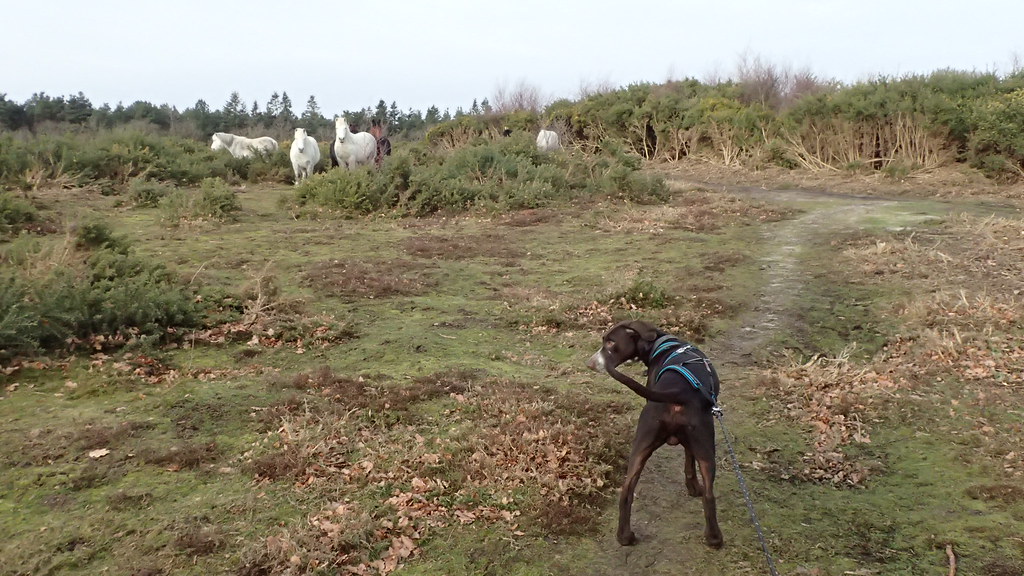
I should mention farm animals here. Wolfy is fascinated by them. We passed lots of breeding sows and piglets, penned out in the open with nothing but a small electrified wire between them and the trail. Pigs are interesting, horses are exciting. Cattle on the other hand, terrify Wolfy. I put it down to him feeling my fear as we crossed numerous bull fields last summer.

The first few miles are quiet roadside and field headland, but then the trail filters onto classic Peddars Way - miles upon miles of very straight green lane, following the ghost of the old Roman military road that sliced the Iceni Kingdom here during the 1st Century AD, following the Boudican Rebellion. There is very little settlement on the Peddars Way, and this 18 mile stretch is particularly desolate - it doesn't pass any pubs, stores, few houses, and no villages or towns. That makes it hard to dog hike - there are few streams, and few places to top up on drinking water. I could detour to one of the Massingham villages a few miles away, but that adds to the pressure of making it to tonights bed and breakfast stop.

We made it to the Massingham Barrow Group. Barrows are late prehistoric burial and cremation mounds that were erected mainly during the Bronze Age, 3,000 to 4,000 years ago to mark the memories of now forgotten chiefs, farmers, warriors, and heroes. These mounds were already ancient when the Romans laid this road. Around this point I developed an injury on my left ankle that was to plague me the rest of the hike, and for several days following.

It became a long 18 miles - with the limp, and water rationing. It was also very hot at times, and by now I was severely burnt. I gave Wolfy the priority of our water rations, and when it was really hot, carried his panniers for him. At times he seemed really heat stressed - but then he would smell a pheasant in the undergrowth and would spring back into life as though it was an act. We finally crossed a cooling stream, and a thin veil of cloud blocked the Sun.

Finally I limped down into Ringstead village, our target destination for the night. We arrived early. We had to sit outside of the Gin Trap Inn and wait for the owners to return. It was worth the wait - they gave me and Wolfy a smashing room, with a wonderful bath! After a wash and some recovery, I had salmon for dinner, before retrieving Wolfy from our room. The owners had reserved the best doggy place in the old coaching inn for him - in front of the bar fireplace. While I enjoyed a few more pints of good ale, Wolfy was then introduced to the Pub dogs - a pair of great danes.

Friday, 6 June 2008

The 62 Mile Dog Walk - Day 1

"Just taking the dog for a walk Dear" .... three days and 62 miles later we returned home! The time was last week, the place - we walked out of the front door in Thetford, through the town, up to Croxton village, then to Wretham village, where we joined the Peddars Way National trail. We turned northwards up the trail that follows an old Roman military road. The target destination was a bus stop in the village of Burnham Overy Staithe on the North Norfolk Coast Path. Burnham was the birthplace of Horatio Nelson.

Day 1 - 28 miles. It was sunny but with some cloudy periods. we left home and walked towards Wretham - through sections of thetford Forest, through a military training area, past army barracks. I carried food, clothes, water etc in my back pack - but Wolfy helped by carrying dried dog food, poo bags, and his own water in his RuffWear panniers. When I dog-hike, I wear the same padded leash belt that I wear whilst canicross training - with Wolfy attached via a long ladder lead. Most of the time he leads ahead - stopping now and then when he smells the scent of some dog - or even better, an other animal. After we had passed Thompson Water a fox crossed our path shortly ahead - twice!

By the time that we had reached the village of Little Cressingham, we had left the limits of Thetford Forest, and were now in a more open arable countryside. Disappointedly, there wasn't a pub in the village - no where to lunch. I had taken some food reserves of fruit and beef jerky, but we had run out of water! I spotted an elderly couple outside of their house, so I asked for water - and they kindly obliged.

At South Pickenham we were treated by three sightings of buzzards hunting the local pastures for the abundant young rabbits. Great birds - they were extinct in Eastern England when I was young, but have recently returned here. Shortly before North Pickenham we crossed through a horse meadow. I tried to cool Wolfy down by enticing him into the stream - but he got it into his head, that I was going to drown him, so I had to abandon that idea!

After Swaffham the Peddars Way follows Procession Lane -a long green lane that in turn followed the route of the old Roman road. It can be hard to walk, as it is very rutted and rough, but at least this time it was dry. Last year it was pure mud! At the end of Procession Lane we crossed the road close to the Swaffham Bypass - close to a McDonalds! Ok, I'm trying to eat healthy - but the jerky and fruit had long diminished, and we needed water. I treated Wolfy to a Mc ice cream in a cone.

At Great Palgrave we passed a farm where last year a large german shepherd dog came out to 'have a go' at us. No trouble this time. After that it was mainly downhill to Castle Acre. At Castle Acre we stopped to photograph the ruins of the medieval priory, and Wolfy cooled down in the ford, before we marched up into the village - through the castle gates and across the green to our bed for the night - the Ostrich Inn.

We had completed 28 miles that day - which is as far as either myself or Wolfy have walked so far in one day. After a bath, I had dinner at the bar, then let Wolfy join me for a few pints of ale before bed.